Dutch Food Vocabulary Lesson 2: Mosselen
Mosselen -- Mussels, raised in the clean waters of the Oosterschelde (Eastern Scheldt) estuary in Zeeland. The mussel season begins with great fanfare in mid-August, and the first of the crop are eagerly awaited; it runs until April. The mussels are often eaten steamed in a little white wine-and-vegetable stock.
(Source: Frommers 12th Edition, "Dutch Cuisine")
http://www.frommers.com/destinations/amsterdam/0043034632.html
My mother came home with 2 kg of mussels that were from the Netherlands, so I decided to do a little tribute to Dutch food again.
So mussels... I flexed my kitchen muscles and got to work. If you’ve been to Oosters in Singapore (The only Belgium restaurant who claim that their mussels come from Belgium), they do a mussels dish with the Hoegaarden, I made my own rendition.

Recipe:
Olive Oil
Chopped garlic
Sliced chili
Sliced ginger
(I would add some lemongrass if I had some at home)
Estimate: A can of beer/1kg of mussels ( I used Calsberg because it was the only thing I had in the fridge, so if you want an all Dutch affair use Heineken.)
Heat oil, sauté everything above for 1-2 minutes, throw in the mussels and pour beer over until it is at least half covered. Cover pot, let it cook, shake the pot after a few minutes and then wait for the mussels to open and they are done. Serve and sprinkle chopped parsley on top.
(Source: Frommers 12th Edition, "Dutch Cuisine")
http://www.frommers.com/destinations/amsterdam/0043034632.html
My mother came home with 2 kg of mussels that were from the Netherlands, so I decided to do a little tribute to Dutch food again.
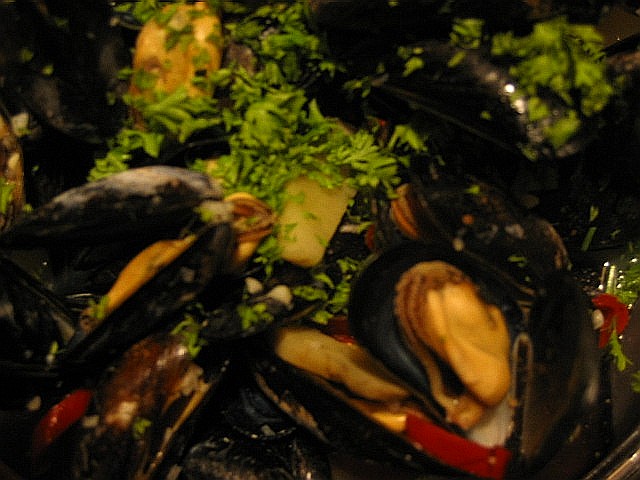
So mussels... I flexed my kitchen muscles and got to work. If you’ve been to Oosters in Singapore (The only Belgium restaurant who claim that their mussels come from Belgium), they do a mussels dish with the Hoegaarden, I made my own rendition.
Recipe:
Olive Oil
Chopped garlic
Sliced chili
Sliced ginger
(I would add some lemongrass if I had some at home)
Estimate: A can of beer/1kg of mussels ( I used Calsberg because it was the only thing I had in the fridge, so if you want an all Dutch affair use Heineken.)
Heat oil, sauté everything above for 1-2 minutes, throw in the mussels and pour beer over until it is at least half covered. Cover pot, let it cook, shake the pot after a few minutes and then wait for the mussels to open and they are done. Serve and sprinkle chopped parsley on top.
posted by joone! at
7:41 PM
0 Comments